

EB-1A Green Cards for Extraordinary Ability
Build and file your EB-1A case end to end — from eligibility and evidence strategy through petition preparation, attorney review, and USCIS filing.
Is EB-1A the Right Fit?
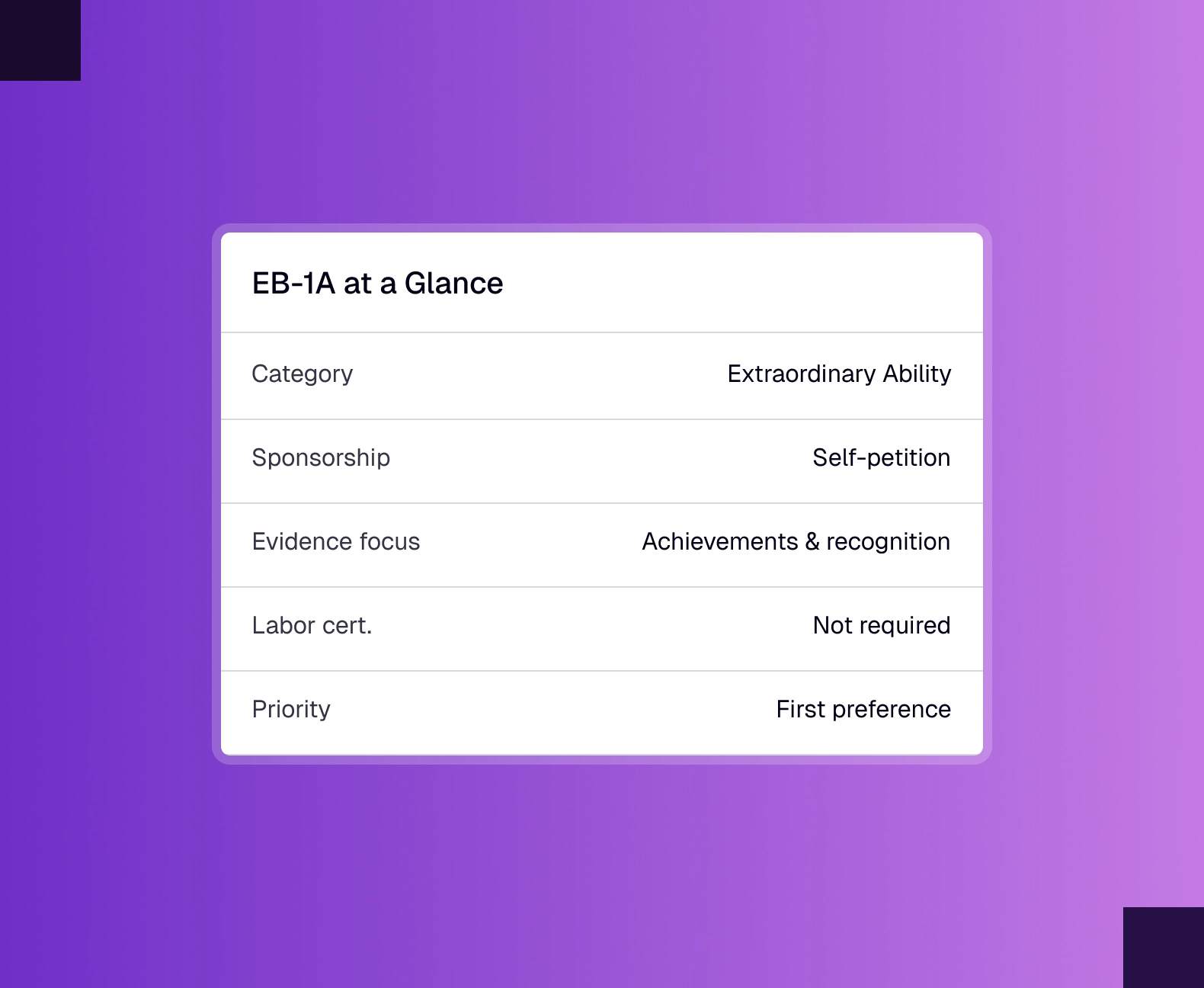
EB-1A may be a fit for individuals with sustained national or international recognition in science, arts, education, business, or athletics. You can self-petition, and no job offer or PERM labor certification is required.
01
Best for
Founders, researchers, engineers, and recognized experts with documented field impact
02
Sponsorship
Self-petition — no employer sponsor or job offer required to file
03
Evidence focus
Achievements, awards, press coverage, citations, patents, and proof of recognition in your field
04
Good to know
Must meet at least 3 of 10 USCIS criteria; sustained recognition strengthens the case
What EB-1A is Designed for
For individuals with extraordinary ability and strong evidence of recognition in their field.
EB-1A is structured for professionals whose work has risen to the top of their field — demonstrated through a pattern of recognition, impact, and independent achievement over time. It does not require a job offer or employer-sponsored labor certification.
Profiles That May Qualify
EB-1A is not limited to a single profession. The pathway is designed for individuals whose work has had documented impact across a range of fields.
- Founders
- Researchers
- Engineers
- Technical leaders
- Recognized experts
What a Strong Case Needs to Show
A strong EB-1A case shows both qualifying evidence and sustained recognition at the top of your field
Show that your work has received meaningful recognition through awards, honors, selective memberships, or major media coverage.
- Awards & honors
- Press coverage
- Selective memberships
- Major media
Show that your work has made original contributions of major significance through research, technology, products, business outcomes, or other field-level impact.
- Patents & IP
- Product impact
- Research citations
- Adoption & usage
Show that you hold a leading or critical role, command significant compensation, or have been trusted to evaluate the work of others in your field.
- Critical roles
- Judging & reviewing
- High compensation
- Leadership evidence
Strengthen the case with published work and independent evidence showing how recognized experts, institutions, or the field view your achievements.
- Scholarly articles
- Citation record
- Expert letters
- Independent references
How LegalOS Supports the Case
LegalOS organizes the evidence gathering and case preparation workflow so your attorney can focus on strategy — not paperwork.
01
Case Fit Review
Assess whether the selected green card category matches the applicant profile before investing time in preparation.
02
Evidence Mapping
Organize achievements, documents, and role details around the right category requirements for a structured petition.
03
Petition Preparation
Turn scattered information into structured petition materials — organized for attorney review and USCIS submission.
04
Attorney Review
Review the case strategy and filing materials with a licensed immigration attorney before submission.
From Profile Review to Filing Support
LegalOS organizes the evidence gathering and case preparation workflow so your attorney can focus on strategy — not paperwork.
Confirm the pathway
Review the applicant profile and determine whether the category is the right fit for their background and goals.
Build the evidence map
Identify what supports the case and surface where evidence gaps remain before filing preparation begins.
Prepare and review
Organize the petition materials for attorney review and filing support — structured and ready for submission.
Pricing for
EB-1A
Purple
Complete I-140 petition preparation and filing with experienced immigration attorneys, clear communication, and visibility every step of the way.
$9,000
What's included:
- Full EB-1A I-140 filing
- Live case tracking
- Attorney review backed by 40+ years of immigration experience
- Standard preparation
- Personalized case timeline
- RFE and NOID responses included
Gold
For faster, more hands-on support, Gold adds priority preparation, weekly attorney check-ins through filing, and a 60% money-back guarantee.*
$15,000
What's included:
- Full EB-1A I-140 filing
- Live case tracking
- Attorney review backed by 40+ years of immigration experience
- Priority preparation in 48–72 hours
- Weekly attorney check-in calls through filing
- Personalized case timeline
- RFE and NOID responses included
- 60% money-back guarantee* (i) Eligibility and conditions apply. See our terms for full details.
Compare Related Green Card Pathways
Not sure which category fits your profile? Review the key differences between employment-based green card pathways.
EB-1A
Founders, researchers, engineers, and recognized experts with documented field impact
EB-1C
For multinational managers and executives transferring into a qualifying U.S. leadership role.
EB-2 NIW
For qualified professionals whose work may serve the national interest. Self-petition available.
FAQ
What is the EB-1A green card?
The EB-1A is an employment-based green card for individuals with extraordinary ability in the sciences, arts, education, business, or athletics. To qualify, you must show sustained national or international acclaim and that your achievements have been recognized in your field. EB-1A allows self-petitioning and does not require a job offer or PERM labor certification
Who is a good fit for EB-1A?
EB-1A may be a strong fit for founders, researchers, engineers, scientists, executives, and other professionals with a significant record of achievement and recognition in their field. Strong cases typically combine multiple forms of evidence — such as awards, media coverage, major contributions, judging, publications, critical roles, or high compensation — with a broader record showing sustained acclaim.
Can I self-petition for an EB-1A green card?
Yes. EB-1A allows you to file Form I-140 on your own behalf without an employer sponsor or job offer. You still need to show that you intend to continue working in your area of extraordinary ability and that your future work will benefit the United States.
What are the 10 EB-1A criteria?
USCIS evaluates evidence across 10 regulatory criteria, including nationally or internationally recognized awards, selective memberships, published material about you, judging the work of others, original contributions of major significance, scholarly articles, artistic exhibitions or showcases, leading or critical roles, high compensation, and commercial success in the performing arts. Most applicants must satisfy at least three criteria unless they have a one-time major internationally recognized achievement.
Is meeting 3 of the 10 EB-1A criteria enough to qualify?
Not by itself. Meeting at least three criteria is the first stage of USCIS review. USCIS then evaluates the evidence as a whole to determine whether you have sustained national or international acclaim and have risen to the level required for extraordinary ability. This second stage is often called the final merits determination.
Can startup founders qualify for EB-1A?
Yes. Startup founders may qualify when their personal record shows sustained recognition and significant impact in their field. Relevant evidence can include major funding, media coverage, awards, product or company impact, original business or technical contributions, judging, speaking, high compensation, critical leadership roles, or recognition from respected experts and institutions. The focus is on the founder’s individual achievements, not simply the success of the company.
Can software engineers or AI professionals qualify for EB-1A?
Yes. Engineers, AI researchers, and other technical professionals can qualify when they can show field-level recognition and impact. Evidence may include patents, influential technical contributions, widely adopted products or open-source work, publications and citations, judging or peer review, critical roles at distinguished organizations, high compensation, awards, or media coverage. A strong job title alone is not enough; the case must show why the individual’s achievements stand out in the field.
What evidence is usually needed for an EB-1A petition?
EB-1A evidence depends on the applicant’s background and strongest criteria. Common evidence includes awards, press coverage, patents, publications, citations, judging or peer-review activity, proof of original contributions, leadership or critical roles, compensation records, selective memberships, and independent expert letters. The strongest petitions connect individual pieces of evidence into a broader record of sustained recognition and impact.
Do I need recommendation or expert letters for EB-1A?
Expert letters are not one of the 10 EB-1A criteria by themselves, but they can help explain the importance of your contributions, your standing in the field, or the significance of other evidence. Strong letters are typically specific, evidence-based, and written by credible experts who can explain why your work matters rather than simply offering general praise.
How long does EB-1A processing take?
Processing time depends on USCIS processing, case complexity, visa availability, and whether you complete adjustment of status in the United States or consular processing abroad. Premium processing is available for EB-1A Form I-140 petitions and requires USCIS to take adjudicative action within 15 business days after receiving a properly filed premium-processing request. The I-140 is only one stage of the green card process, so the total timeline can be longer.
How much does an EB-1A green card cost?
The current USCIS filing fee for Form I-140 is $715. EB-1A self-petitioners generally also pay a $300 Asylum Program Fee. Optional premium processing, adjustment-of-status or consular-processing fees, medical exams, translations, and other government or third-party costs may apply separately.
Use the LegalOS USCIS Fee Calculator to estimate the government filing fees for your case: https://www.legalos.ai/tools/uscis-fee-calculator
What happens if I receive an RFE on my EB-1A petition?
A Request for Evidence, or RFE, means USCIS wants additional information before deciding the petition. An EB-1A RFE may question whether particular criteria have been satisfied, the significance of the evidence, or whether the overall record demonstrates sustained acclaim. A strong response addresses the specific concerns raised by USCIS and strengthens the supporting evidence and case narrative.
Is EB-1A the same as the O-1A visa?
No. O-1A is a temporary work visa, while EB-1A is an immigrant classification that can lead to permanent residence. Both focus on extraordinary ability and use overlapping types of evidence, but they have separate legal standards and filing requirements. Applicants with strong O-1A records often evaluate EB-1A as a longer-term green card pathway.
How does LegalOS handle EB-1A cases?
LegalOS handles the EB-1A process end to end — from eligibility review and evidence strategy through petition preparation, attorney review, USCIS filing, and case tracking. We map your strongest achievements to the EB-1A criteria, identify gaps in the case, develop the petition narrative, prepare the supporting materials, and coordinate experienced immigration attorney review so your case moves through one structured process from intake to filing.

